
Communication Play
Our children are growing up in a world where they need to learn how to communicate both online and in real life. Given the extent to which technology is in our children’s lives, they will absolutely need to learn how to communicate online in a safe and healthy way; however, that doesn’t mean that face-to-face communication is less important than it used to be. In fact, now that online play has become more prevalent, our children need more practice with direct communication play these days.
Communication play uses words and gestures as the primary means of play (e.g. charades, telling jokes, play acting). These games and activities help kids practice those essential in person communication skills including picking up on body language, listening to others, and having conversations. In addition, children also get to practice social skills like making decisions, following directions, and cooperation.

Inside: An incredible collection of play ideas for families during times when they need to stay at home. Also, why play helps at this time, and how we can view this as an opportunity to re-connect .
Usually, as families, we have busy schedules, and people are often going to sports practice or games, lessons, or after school activities. Because of the coronavirus and social distancing, things are getting canceled everywhere. This is a stressful time, and things seem to be changing day-to-day. Overall, what this means is that families are going to be spending a lot more time at home.

Play advocates often talk about the importance of open ended play, open ended play materials and having play be child led instead of adult led. There is a popular theory called Loose Parts was developed by Simon Nicholson in 1971.

The play date has been getting some negative press, with people listing all the things they don’t like about them. There are pros and cons to everything, so I decided to explain why I appreciate play dates.

On today’s episode, I share two ways to practice the important social skill of listening!

On today’s episode, I share four fun ways for families to connect, get to know one another, and de-stress together!
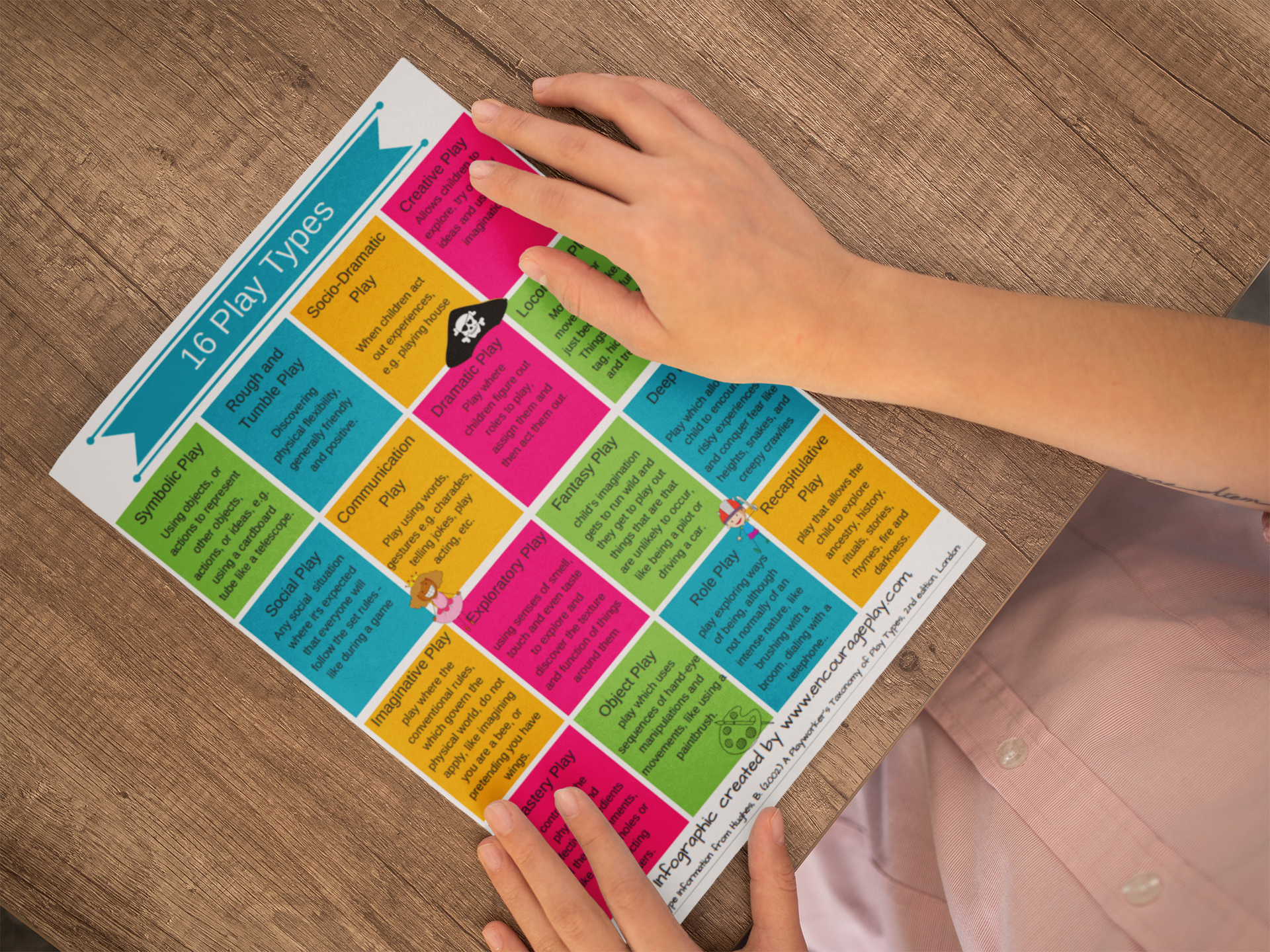
Inside: Definition of 16 play types from Bob Hughes and ideas for play materials to encourage variety in the way children play.
Definition of play:
“Engage in activity for enjoyment and recreation rather than a serious or practical purpose.”

Inside: An overview of 10 games that can be used to work on social-emotional learning at school, in small group settings or at home.
What was your favorite game to play as a kid? For me, it was Monopoly. My sister and I played this game all the time - it would keep us entertained for hours on a cold winter day.

For as long as I can remember, playing video games has been way of connecting and spending time with my family.
I vividly remember when my big brother got the original Nintendo with Duck Hunt. We were in our cozy family den with my brother and sister, so excited to try it out. And he finally let me try it too! Guess what - I wasn’t very good at it, but I loved watching my brother play.

Inside: 3 quick tips to connect with your family during a meal time. Even if you can't get together and connect during the week, the weekend is a great time to try this too!
It’s been a typical busy Wednesday after school. You’ve been helping with homework, driving your kids to dance and karate, and then taking a few minutes to make a quick Target run.
You’re finally all sitting down for dinner, but sometimes it’s hard to connect and chat. “How was school today?” gets you a one word answer. That’s not helpful. So what are some ways you can connect with each other during dinner?

Inside: 8 Fun Ways to Practice Listening with Kids using games - perfect for school, groups or even at home!
How many times have you said something, and it clearly didn’t register with your child because YOU hear...

Inside: a list of social skills, both external (interacting with others) and internal (your inner thoughts & feelings) with playful ways to practice them.
Recently I went to a symposium on play where Stuart Brown, author of Play: How it Shapes the Mind, Opens the Imagination and Invigorates the Soul, was speaking. I took off my mom yoga pants and put on real ones, drove to the symposium and sat down at a table. I pretended that I'm not an introvert and started talking to my neighbor. After I gave her my 30 second description of Encourage Play, she said “that sounds great but what does that really mean?”

Children (and people in general) have to take turns all the time. Children take turns when they play games like checkers or four square, while they participate in a class discussion, or during a conversation. Adults have to wait and take turns too - in meetings, in stores and when driving. Taking turns, and in particular, waiting for the time when it’s your turn, can be frustrating. It’s good to practice turn taking, because it happens all the time.

This is one of my new favorite social skills games! Why? Because not only do I enjoy playing, children really enjoy playing. I found this game at the Chicago Toy and Game Fair. As soon as I saw it, I wanted to play with my clients to see how they reacted. And it was a resounding positive response.

The bell rings for lunch time. Five 9 year olds bound into my office, smiles on their faces and giving me cheerful greetings as they come through the door. They pick a seat, place their lunches on the table, then immediately ask about the question box. They can’t wait to see what the questions are this week. One little girl reaches over, picks a question out of the box and reads it to the group. “If you could have any superhero power, what would it be and why?” The rest of them jump right in and start answering immediately.

“You lost your phone again?!! Seriously?” He smiles and chortles while dialing on his own cell phone so I can find mine. Fingers crossed it’s not on silent or do not disturb.
I misplace my cell phone at least twice a day. It’s out of control. I know I should create some sort of system, a place where it always goes, but I haven’t done that yet. Instead I lose it, then spend a few minutes searching, and inevitably, my husband sees me or I ask him to help me. He teases me about it all the time. But it’s kind of our thing we do. I lose my phone and ask for help, he teases me and helps me find it. Rinse and repeat daily :-)

Sometimes parents will say they have a hard time getting their kids to open up or talk with them about things. I think a great way to connect with your own children is to create a family book club. Reading a book together shows that you think reading is important and an enjoyable past time and, while you’re discussing the book, your child can practice conversation skills and potentially talk about things that are happening in their own lives. Here are 3 strategies you can use to help start your own book club:
How do you communicate with other people during one day? Do you talk face to face with them? Do you text them? Facetime them? Email them?
Humor me. Take a minute and check how many text messages and emails you received in the last 24 hours. I’ll wait.