Flexible Thinking
Some kids struggle with rigid thinking - they may have a set idea in their mind of how thing are supposed to go, and they don’t react well when that exact plan doesn’t happen. These types of kids need to learn to be flexible, think outside the box, and manage changes. For them, it means being willing to change plans and go with the flow. It means looking at things in a different way. It means letting go of being in charge. These activities are designed to help kids think outside the box and practice flexible thinking.

Play advocates often talk about the importance of open ended play, open ended play materials and having play be child led instead of adult led. There is a popular theory called Loose Parts was developed by Simon Nicholson in 1971.

A cardboard box (shoe boxes, amazon boxes, small boxes, etc) is the perfect thing to use to help kids think flexibly, be creative, and set the groundwork for problem solving.

Inside: An overview of 10 games that can be used to work on social-emotional learning at school, in small group settings or at home.
What was your favorite game to play as a kid? For me, it was Monopoly. My sister and I played this game all the time - it would keep us entertained for hours on a cold winter day.

Inside: An interview with Missy Benson from Playworld, talking about the importance of outdoor play and inclusive play, and the new PlayForm 7 in the Boston area.
“Oh. my. Goodness!!!” my daughter shrieked with excitement. My son’s eyes widened and he took off running toward the playful chaos of the playground.

One of the first more elaborate projects I remember doing with my daughter was making a puppet theater. We took a cardboard box (our favorite toy around here) and painted it and made curtains from scraps of cloth. She had a blast using her finger puppets for the show, and later setting up toy figures. However, the box got old and tattered, so we got rid of it.

This was one of the first books in the series of Superflex books from Social Thinking® and Michelle Garcia Winner. Out of all of the Superflex books, I like it the best.
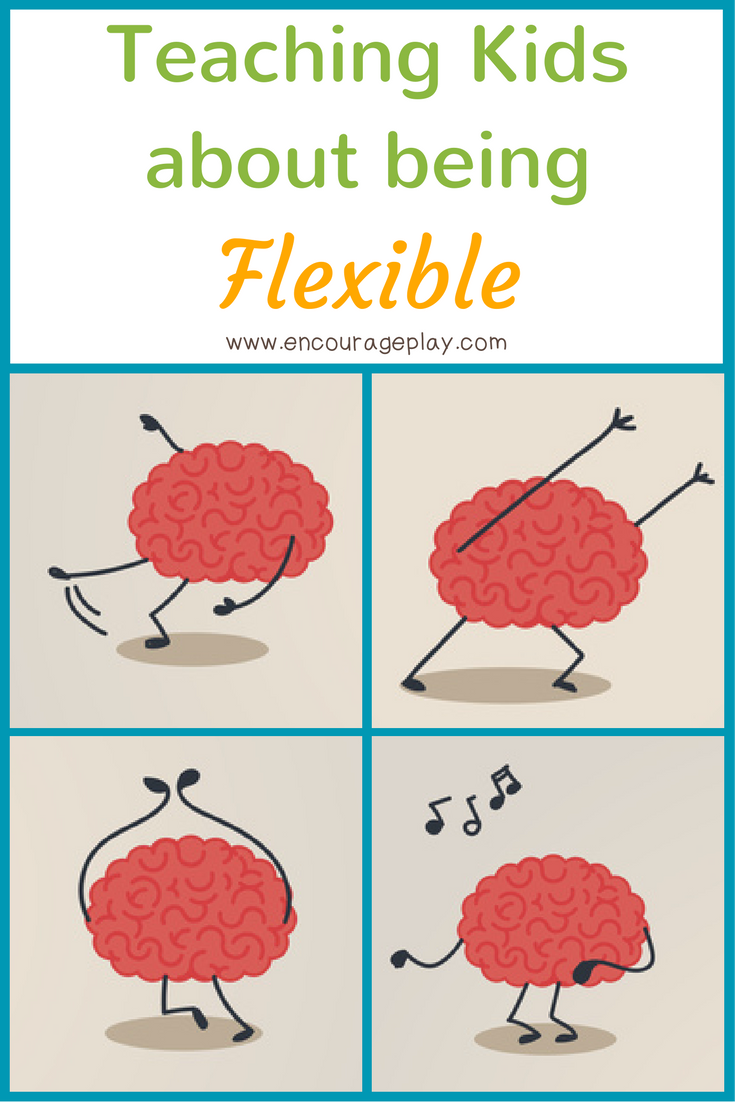
Have you ever had one of those parenting moments where you realize you thought you had taught your kids something, but realized you actually never had?
I realized recently that my daughter doesn't know what being flexible means. I say it to her all the time and I always thought she understood what I meant. Today my son was a little cranky, so I asked her to be flexible. As I watched, she continued to be inflexible. I finally asked asked her “What do I mean when I say be flexible with your brother?” She said “be nice”. While I think it's good that she knows to be nice to her brother it's actually not what flexibility is all about.

These games are great for families to play together. These games build skills like flexibility, creative thinking and perspective taking. A lot of these games can also be used on play dates as well.
We love arts and crafts in our house! But you don’t need to have a ton of fancy supplies to have fun and be creative. Here are some of our favorite arts and crafts supplies!