
Play is vital and necessary for children. I’m always finding a lot of great articles and videos about the importance of play. Here are a few of my favorites, enjoy!
ARTICLES
Encouraging creativity everyday
I love to hear about how other kids are creating and using materials. I’ve seen an increase in the projects my kids make since reorganizing their arts and crafts supplies and making them more attractive and accessible. It’s all about the process, not the product.
The Importance of Creative Play
I love this! In particular, I appreciate the discussion of how kids practice social skills all the time when they play. Kids learn social skills through play.
Don’t Let Your Preschoolers Forget How To Play
I’m so glad kids went to preschools where they knew the importance of play, and they got to play daily.
The Brain Loves to Play, and Here’s Why
Seven reasons why the brain loves play, I particularly love #4 and #6.
The Importance of Play
A great example of how play can be transformative for kids. It’s not “just play” they are skills for life - Love it!
VIDEOS
This video of Opal School Children discussing play is amazing! The joy and excitement on the kids faces is wonderful to watch!
Episode 29 of the Calm & Connected Podcast
In this episode, I talk about how awesome creativity and imaginative play are for kids.

Inside: An incredible collection of play ideas for families during times when they need to stay at home. Also, why play helps at this time, and how we can view this as an opportunity to re-connect .
Usually, as families, we have busy schedules, and people are often going to sports practice or games, lessons, or after school activities. Because of the coronavirus and social distancing, things are getting canceled everywhere. This is a stressful time, and things seem to be changing day-to-day. Overall, what this means is that families are going to be spending a lot more time at home.

Play advocates often talk about the importance of open ended play, open ended play materials and having play be child led instead of adult led. There is a popular theory called Loose Parts was developed by Simon Nicholson in 1971.

The play date has been getting some negative press, with people listing all the things they don’t like about them. There are pros and cons to everything, so I decided to explain why I appreciate play dates.

A cardboard box (shoe boxes, amazon boxes, small boxes, etc) is the perfect thing to use to help kids think flexibly, be creative, and set the groundwork for problem solving.
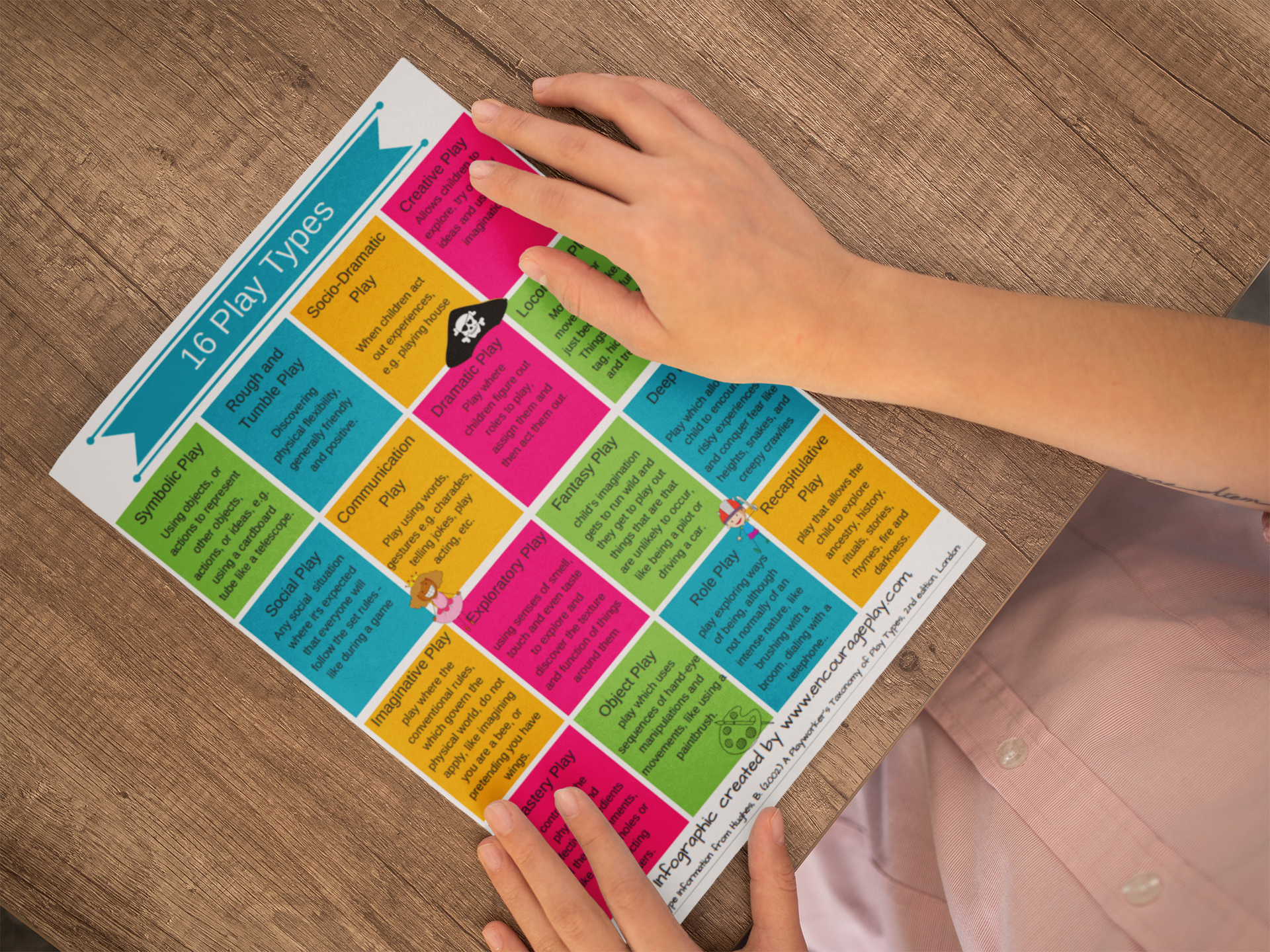
Inside: Definition of 16 play types from Bob Hughes and ideas for play materials to encourage variety in the way children play.
Definition of play:
“Engage in activity for enjoyment and recreation rather than a serious or practical purpose.”
Inside: An overview of 10 games that can be used to work on social-emotional learning at school, in small group settings or at home.
What was your favorite game to play as a kid? For me, it was Monopoly. My sister and I played this game all the time - it would keep us entertained for hours on a cold winter day.

Inside: a list of social skills, both external (interacting with others) and internal (your inner thoughts & feelings) with playful ways to practice them.
Recently I went to a symposium on play where Stuart Brown, author of Play: How it Shapes the Mind, Opens the Imagination and Invigorates the Soul, was speaking. I took off my mom yoga pants and put on real ones, drove to the symposium and sat down at a table. I pretended that I'm not an introvert and started talking to my neighbor. After I gave her my 30 second description of Encourage Play, she said “that sounds great but what does that really mean?”

Imagine a group of 4 kids, ranging from 9 - 14, working together, cooperating and solving some unusual and silly problems together. They were smiling, and proud of what they created.

Do you remember the excitement you’d feel when you had a sub in elementary school? They always did things a little differently, and perhaps you’d get a chance to do something really unique and different.
Once, I had a sub who loved to do art projects. She taught us how to make scratch paintings. I loved it from the first time I did it, and when I showed my own kids how to make them, they loved it too.

Children (and people in general) have to take turns all the time. Children take turns when they play games like checkers or four square, while they participate in a class discussion, or during a conversation. Adults have to wait and take turns too - in meetings, in stores and when driving. Taking turns, and in particular, waiting for the time when it’s your turn, can be frustrating. It’s good to practice turn taking, because it happens all the time.
